Almost every website and app today asks users to accept a Privacy Policy. Most people click “Agree” without reading it, but many later wonder why their data is still being used for ads, marketing calls, emails, and promotions.
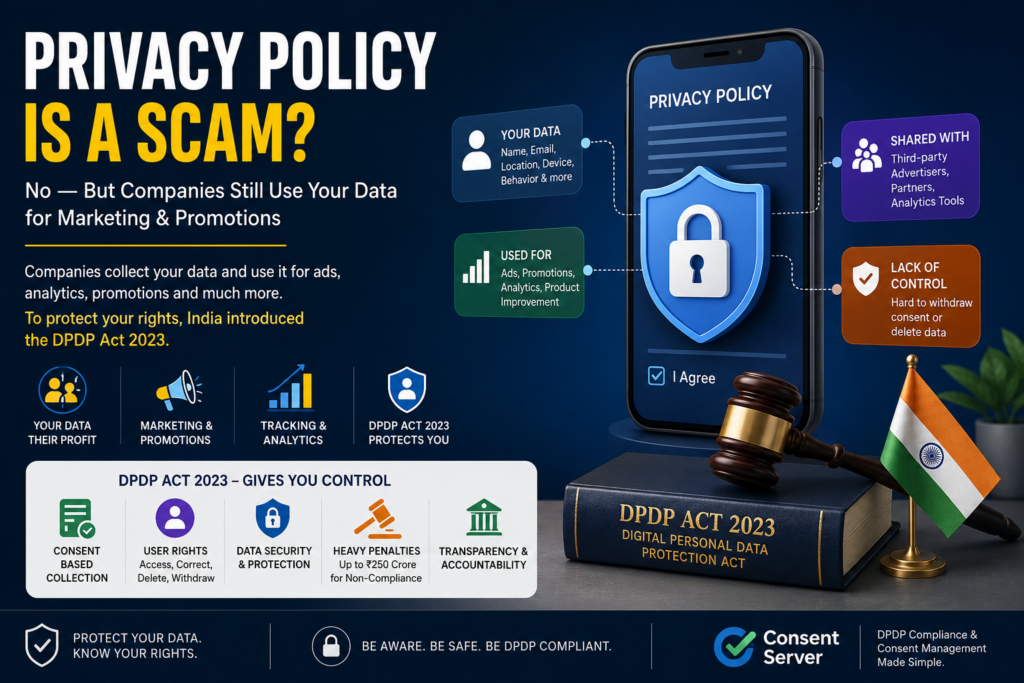
The truth is — Privacy Policies are not scams, but many companies collect and use user data in ways people don’t fully understand. This growing concern is one of the biggest reasons why the Indian Government introduced the Digital Personal Data Protection Act 2023.
How Companies Use Your Data
When you use websites, apps, or online services, companies may collect:
- Name
- Mobile number
- Email address
- Location
- Browsing behavior
- Purchase history
This data is often used for:
Marketing & Promotions
Businesses send:
- Promotional emails
- WhatsApp campaigns
- SMS marketing
- Personalized advertisements
User Tracking & Analytics
Companies track what users search, click, and purchase to improve targeting and advertising.
Third-Party Sharing
Some organizations also share data with advertising or analytics partners.
This lack of transparency is why users are becoming more privacy-conscious.
Why India Introduced the DPDP Act
The Digital Personal Data Protection Act 2023 was introduced to protect citizens’ personal data and give users more control over how businesses handle their information.
The law ensures that companies:
- Take proper user consent
- Use data responsibly
- Protect user information
- Allow users to withdraw consent
- Maintain transparency
Key Features of the DPDP Act
Consent-Based Data Collection
Businesses must collect clear and informed consent before processing user data.
User Rights
Users can:
- Access their data
- Correct information
- Delete data
- Withdraw consent
Heavy Penalties
Non-compliance can lead to penalties up to ₹250 Crore.
Why Businesses Need DPDP Compliance
Any company collecting customer information through:
- Websites
- Contact forms
- Apps
- CRM systems
- Marketing campaigns
should focus on DPDP compliance.
Ignoring compliance can lead to:
- Legal penalties
- Loss of customer trust
- Brand reputation damage
Consent Server is a complete DPDP compliance and consent management platform for Indian businesses.
It helps organizations with:
- Consent collection
- Consent tracking
- Audit logs
- Consent record storage
- User rights management
- Privacy compliance monitoring
Final Thoughts
Privacy Policies alone are no longer enough. Users now expect transparency, security, and control over their personal data.
The DPDP Act 2023 is India’s step toward building a safer digital ecosystem where businesses handle user data responsibly and transparently.
Businesses that adopt proper privacy and consent management systems early will build stronger customer trust and long-term credibility.
FAQ
What is the DPDP Act?
The DPDP Act 2023 is India’s data privacy law that regulates how businesses collect and process personal data.
Can companies use my data for marketing?
Yes, but they should obtain proper user consent before doing so.
What is consent management?
Consent management means collecting, storing, and managing user permissions for data usage.
What happens if businesses ignore DPDP compliance?
Organizations may face legal penalties, reputation damage, and customer trust issues.
What is Consent Server?
Consent Server is a DPDP compliance platform that helps businesses manage user consent and privacy operations.
Ensure your business stays compliant, protects customer data, and avoids penalties of up to ₹250 Crore.
Get started with Consent Server today.
📞 Contact: 9289862523
🌐 Website: https://consentserver.net/
Your Privacy. Your Compliance. Our Technology.